
Key Takeaways
- Glutes grow from mechanical tension, volume, and progressive overload
- Weighted vests provide an effective, joint-friendly way to load glute-focused exercises
- Single-leg movements are especially powerful for glute hypertrophy
- Muscle can grow with lighter loads if sets are taken close to failure
- Nutrition and sleep are essential for results
Building fuller, stronger glutes (“a better booty”) doesn’t require a barbell-only gym routine. A weighted vest can be a powerful tool for glute growth when it’s used with the right exercises, volume, and progression.
Below is a science-backed explanation of why weighted vests work for glute hypertrophy, how to use them effectively, and what the research actually says.
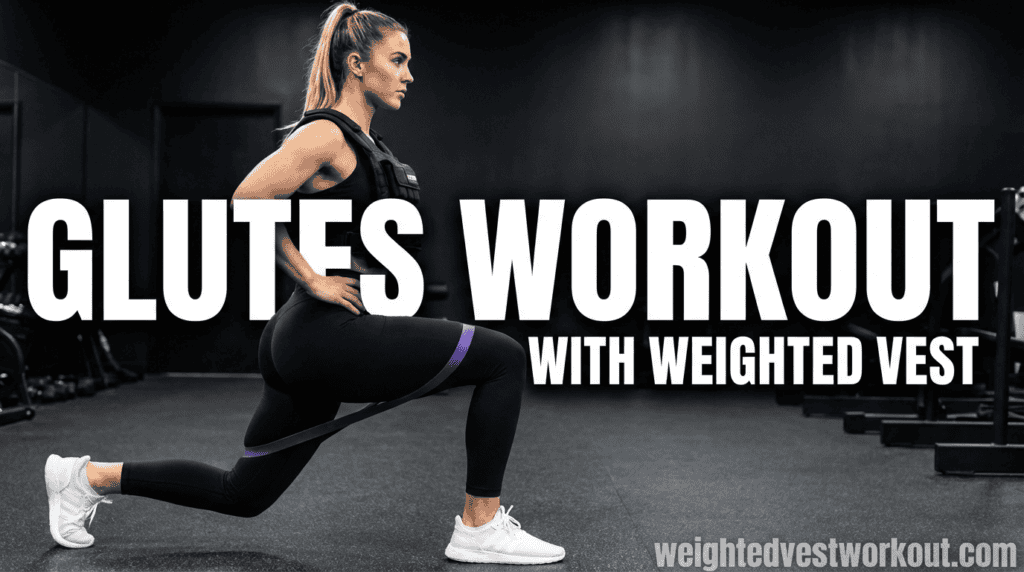
Why Weighted Vests Can Build Your Glutes
1. Glutes Grow From Mechanical Tension — Not Fancy Equipment
Muscle hypertrophy is driven primarily by mechanical tension, with metabolic stress and muscle damage playing supporting roles. When muscles are challenged under load—especially close to fatigue—they receive a strong growth stimulus.
A weighted vest increases mechanical tension during:
- Squats
- Lunges
- Step-ups
- Split squats
That added load turns “too-easy” bodyweight movements into legitimate glute builders.
2. Progressive Overload Is What Actually Triggers Growth
To keep growing muscle, the stimulus must gradually increase over time—a principle known as progressive overload.
The American College of Sports Medicine (ACSM) recommends increasing resistance, volume, or difficulty as adaptation occurs to continue muscular development.
A weighted vest makes overload simple:
- Add 1–2 lb to the vest
- Add reps or sets
- Slow down tempo
- Increase range of motion
All of these count as progressive overload.
3. Glutes Respond Well to Moderate-to-High Training Volume
A large meta-analysis found a dose–response relationship between training volume and muscle hypertrophy, with greater growth occurring as weekly sets increase (up to a point).
Weighted vest training allows you to accumulate high-quality glute volume without heavy spinal loading, especially through single-leg exercises.
4. You Don’t Need Heavy Weights to Build Muscle
Research shows muscle hypertrophy can occur across a wide range of loads—as long as sets are taken close to muscular failure.
This is key for weighted vest training:
- You can use lighter absolute loads
- Perform higher reps (10–25+)
- Still stimulate glute growth effectively
5. Single-Leg Exercises = Higher Glute Activation With Less Weight
Single-leg movements increase relative load on each glute and improve hip stability. Weighted vests excel here because the load is:
- Centered on the torso
- Hands-free
- Stable throughout the movement
This makes exercises like Bulgarian split squats and step-ups extremely effective for glute hypertrophy.
Best Weighted Vest Exercises for Glute Growth
Bulgarian Split Squats
- Deep hip flexion = high glute tension
- Excellent stretch + contraction stimulus
- Ideal for progressive overload
Tip: Take a long stance and lean slightly forward.
Step-Ups
- Strong hip extension demand
- Excellent “upper glute” emphasis
- Scales well with a vest
Tip: Use a box around knee height and avoid pushing off the back foot.
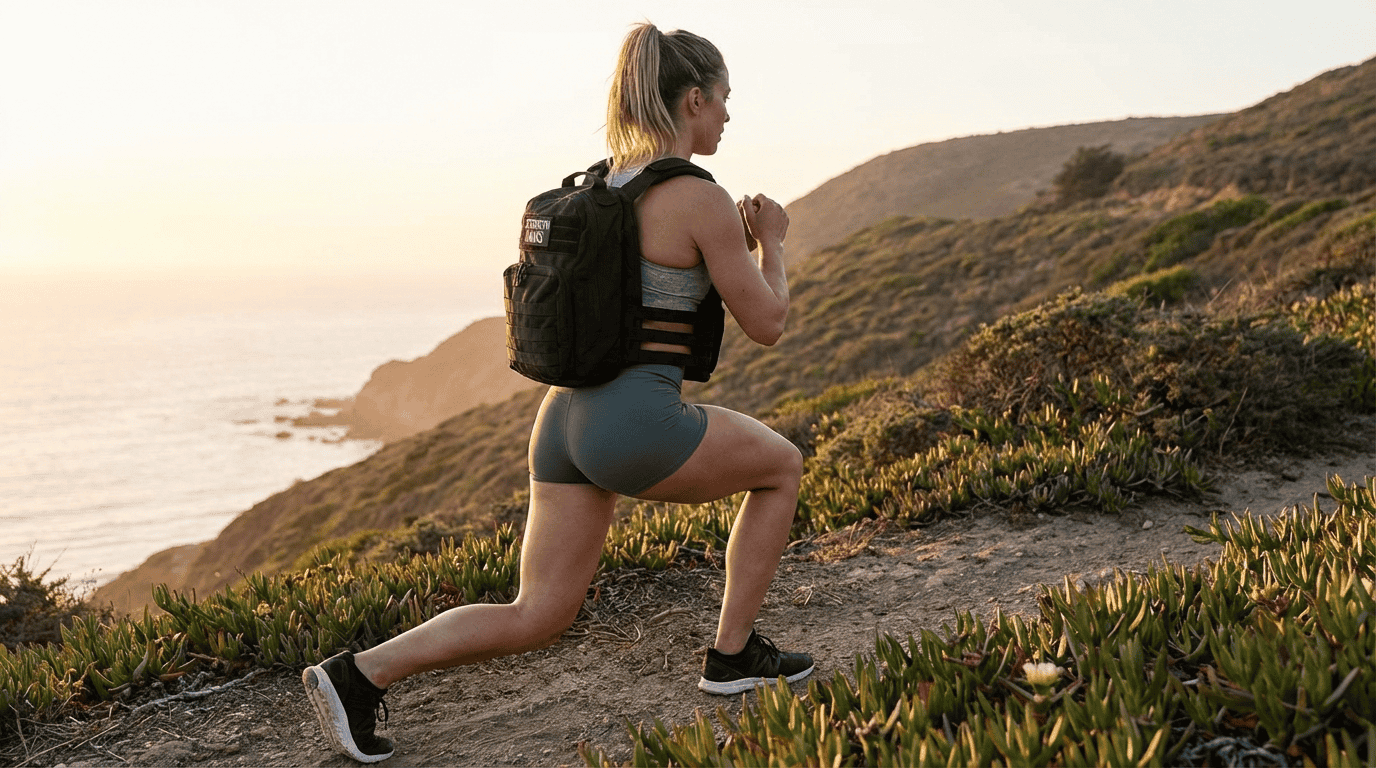
Reverse & Walking Lunges
- Less knee stress than forward lunges
- High glute activation with longer strides
- Great for volume days
Squats (Vest-Loaded)
- Use a slightly wider stance
- Sit back and down
- Add tempo (3 seconds down) to increase tension
Glute Bridges / Hip Thrust Variations
EMG research shows hip thrusts produce very high gluteus maximus activation compared to many other lower-body lifts.
While EMG doesn’t equal growth, longer-term studies show similar glute hypertrophy from hip thrusts and squats when volume is equated.
With a vest, single-leg bridges and paused reps work best.
How Heavy Should the Vest Be?
For glute hypertrophy:
- Beginner: 5–10% of bodyweight
- Intermediate: 10–15%
- Advanced: 15–20% (if form stays solid)
Choose a weight that allows 6–20 challenging reps per set.
Is Weighted Vest Walking Enough to Grow Glutes?
Weighted vest walking increases:
- Energy expenditure
- Oxygen consumption
- Lower-body muscle demand
However, walking alone is usually insufficient for significant glute hypertrophy. It’s best used as:
- A recovery tool
- A fat-loss supplement
- Extra low-intensity volume
For glute size, you still need hard sets near failure with glute-focused exercises.
Nutrition & Recovery Matter (A Lot)
- Protein: The ISSN recommends ~1.4–2.0 g/kg/day for resistance-trained individuals.
- Calories: Maintenance or a slight surplus supports glute growth
- Sleep: Sleep restriction can negatively affect muscle protein synthesis and recovery.
Training is only the signal—recovery is the adaptation.
FAQs
Can you build glutes using only a weighted vest?
Yes—especially for beginners and intermediates—if you train close to failure, use sufficient volume, and progressively overload.
How many days per week should I train glutes with a weighted vest?
2–3 focused glute sessions per week with at least 48 hours between hard sessions works well for most people.
Do I need to train to failure?
No. A large meta-analysis found similar hypertrophy whether sets are taken to failure or stopped slightly short.
Aim for 1–3 reps in reserve on most sets.
Are weighted vests safe for knees and lower back?
Yes—when weight is progressed gradually and form is maintained. Single-leg exercises often reduce spinal loading compared to barbells.
What grows glutes faster: squats or split squats?
Both work. Split squats often allow higher glute tension with less total load, making them ideal for vest-based training.
How long until I see glute growth?
Visible changes typically appear in 6–8 weeks, depending on training consistency, nutrition, and genetics.